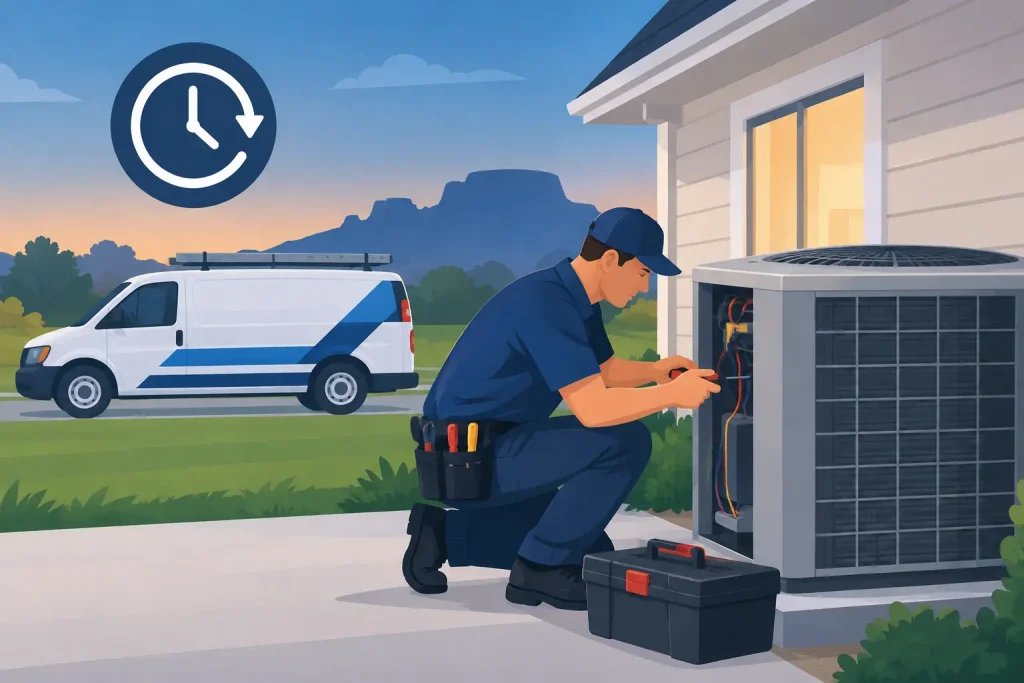
When the AC stops cooling during a Yukon summer afternoon or the furnace quits on a freezing night, waiting until regular business hours may not be realistic. Reliable 24 hour HVAC repair Yukon OK service helps protect your family, your property, and your peace of mind when comfort systems fail at the worst possible time.
Not every HVAC issue requires an emergency call, but some do. Knowing the difference can help you take the right next step without guessing, spending unnecessarily, or putting your household at risk.
When to Call for 24 Hour HVAC Repair in Yukon, OK
A system that is not keeping up can be frustrating. A system that creates a safety concern, exposes people to dangerous temperatures, or threatens damage to your home needs prompt attention.
Call for emergency service if you smell gas, burning wiring, or smoke near your furnace, air handler, or outdoor unit. Leave the home and contact your gas utility or emergency services first if you suspect a gas leak. Do not turn lights, appliances, or thermostats on and off while you are inside the area. An HVAC technician can address equipment repairs after the immediate safety concern has been handled.
You should also seek help quickly when your air conditioner stops working during extreme heat, especially if infants, older adults, pets, or anyone with a medical condition is in the home. The same applies when a furnace or heat pump cannot provide heat during freezing weather. Oklahoma weather can change quickly, and indoor temperatures can become uncomfortable or unsafe faster than many homeowners expect.
Other urgent situations include water leaking heavily from an indoor unit, repeated circuit breaker trips, loud grinding or banging noises, and a commercial system failure that affects employees, customers, inventory, or operations. A small drip from a drain line may be manageable for a short time. Water spreading across a ceiling, wall, or floor is not.
What You Can Safely Check Before Calling
A few simple checks can sometimes restore operation or give your technician useful information. These steps should never involve removing panels, touching wiring, or working around gas lines.
First, check the thermostat. Make sure it is set to heat or cool, the temperature setting is appropriate, and the batteries are working if it uses them. During cooling season, confirm the fan setting is on Auto rather than On. A fan running continuously can make it seem like the system is operating even when it is not producing cooled or heated air.
Next, check your electrical panel for a tripped breaker. If a breaker has tripped once, you can reset it one time. If it trips again, leave it off and call for service. Repeated trips can point to an electrical fault, a failing motor, or another issue that should not be ignored.
Look at the air filter as well. A severely clogged filter restricts airflow and can contribute to frozen evaporator coils, overheating furnaces, reduced comfort, and higher energy use. Replace a dirty filter with the correct size and type. If your AC is frozen, turn the system off at the thermostat and set the fan to On if it will run. This can help the ice thaw, but it does not correct the reason the coil froze in the first place.
Finally, make sure the outdoor unit is clear of leaves, grass clippings, and other debris. Keep a clear area around it, but do not spray electrical components or try to take the equipment apart. If the system still will not start, is making unusual noises, or is blowing the wrong temperature of air, it is time for professional diagnostics.
Common Reasons HVAC Systems Fail After Hours
HVAC breakdowns rarely feel convenient, but they often have causes that developed over time. A capacitor can fail after years of heat exposure. A blower motor may begin drawing too much power. A dirty coil can slowly reduce efficiency until the system can no longer keep up. Refrigerant leaks, drain clogs, worn contactors, and thermostat failures can also lead to sudden loss of cooling or heating.
In winter, ignition problems, failed flame sensors, pressure switch issues, and damaged heat exchangers can keep a furnace from operating correctly. A heat pump may struggle because of a defrost problem, a failed reversing valve, or an outdoor-unit issue. The symptoms can look similar from the thermostat, which is why accurate testing matters.
A qualified technician should identify the root cause rather than replace a part based only on a symptom. For example, a failed capacitor may be a straightforward repair. But if a motor is overheating because airflow is restricted or electrical readings are out of range, replacing the capacitor alone may not provide a lasting solution.
What to Expect During an Emergency HVAC Visit
The goal of an after-hours HVAC visit is to restore safe, dependable operation whenever practical. A technician should begin with diagnostics, not assumptions. That means checking thermostat operation, electrical connections, safety controls, airflow, components, and system performance before recommending a repair.
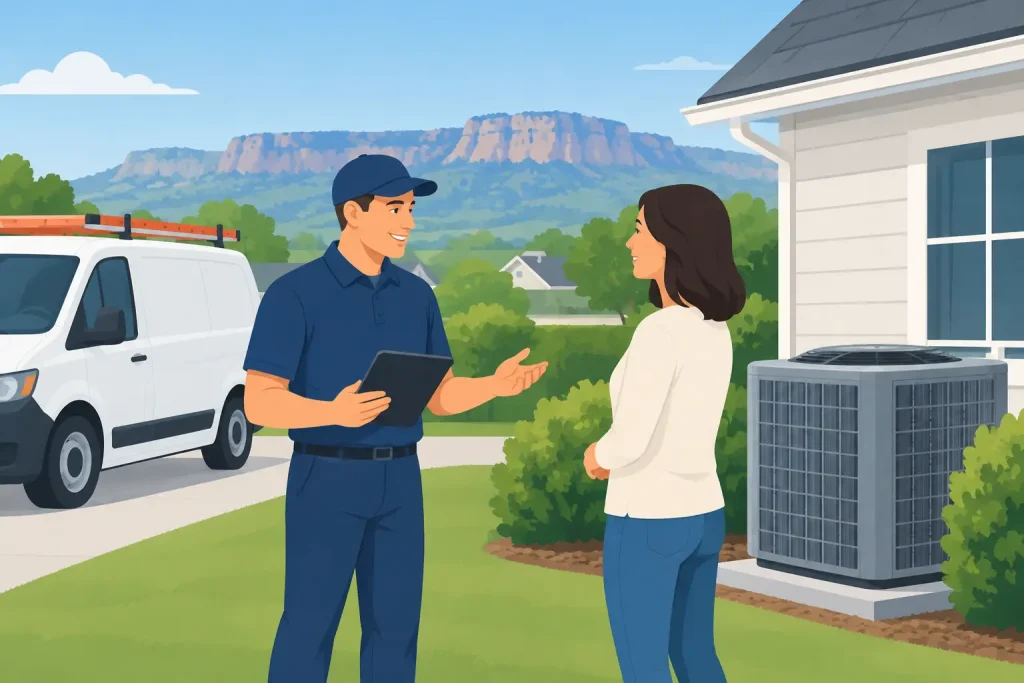
You deserve a clear explanation of what failed, what needs attention now, and what may need to be planned for later. In many cases, a repair can get the system running again that night. In other cases, especially when a major component has failed or the equipment is unsafe to operate, a temporary comfort plan and a follow-up repair or replacement discussion may make more sense.
Replacement is not automatically the answer because a unit is older. The right choice depends on the condition of the equipment, repair cost, efficiency, expected remaining life, refrigerant type, and your plans for the property. If replacement is the better long-term value, you should understand why and receive straightforward options, including a free equipment replacement estimate when appropriate.
For small businesses, fast communication matters just as much as the repair itself. A failed rooftop unit, mini-split, or office heating system can disrupt staff and customers. Emergency service should focus on minimizing downtime while giving the property owner a realistic picture of the repair timeline and options.
How to Protect Your Home Until Help Arrives
If your cooling system is down during hot weather, close blinds or curtains on sunny windows, use ceiling fans, and limit use of ovens, dryers, and other heat-producing appliances. Drink water and move vulnerable family members to a cooler location if indoor temperatures continue to rise. Fans can improve comfort, but they do not replace safe cooling during dangerous heat.
If heat is out, close off unused rooms, add layers, and keep exterior doors closed as much as possible. Never use an oven, grill, or unvented fuel-burning device to heat your home. Space heaters should only be used according to their instructions, placed on a stable surface, and kept well away from bedding, curtains, furniture, and children.
If you notice water around the indoor HVAC equipment, turn the system off to prevent further damage. Place towels or a container beneath a small accessible drip if it is safe to do so, but do not climb into an attic or work around wet electrical equipment. If you smell burning or see smoke, shut off power only if you can do it safely and contact emergency services.
Preventing the Next After-Hours Breakdown
No maintenance plan can guarantee that a component will never fail, but routine service gives technicians a chance to find developing issues before peak summer or winter demand. Seasonal tune-ups can catch weak capacitors, dirty coils, drainage problems, worn electrical connections, combustion concerns, and airflow restrictions that may otherwise become an emergency call.
Homeowners can help by changing filters regularly, keeping supply and return vents open, clearing debris from around outdoor equipment, and paying attention to changes in sound, run time, humidity, or utility bills. If your system begins short cycling, takes much longer to cool or heat, or needs frequent resets, schedule service before it quits completely.
ComfortShield Heat & Air approaches emergency repairs with the same standard used for planned service: diagnose carefully, explain the options clearly, and recommend the repair that best serves your home or business. When your comfort cannot wait, acting early and choosing a local team focused on the root cause can make a difficult night much easier to manage.