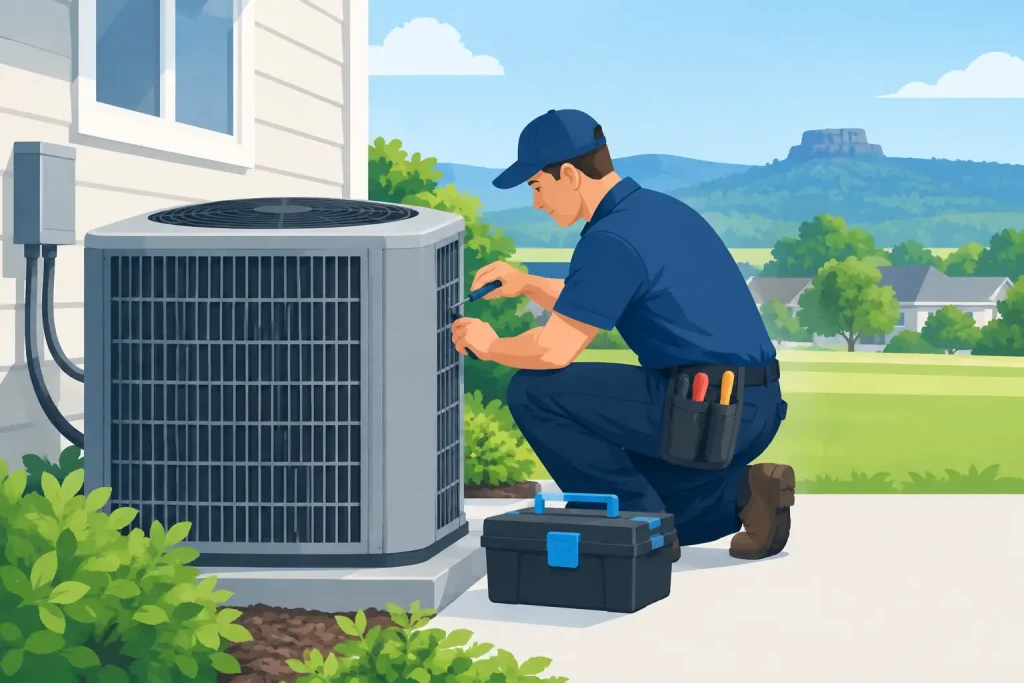
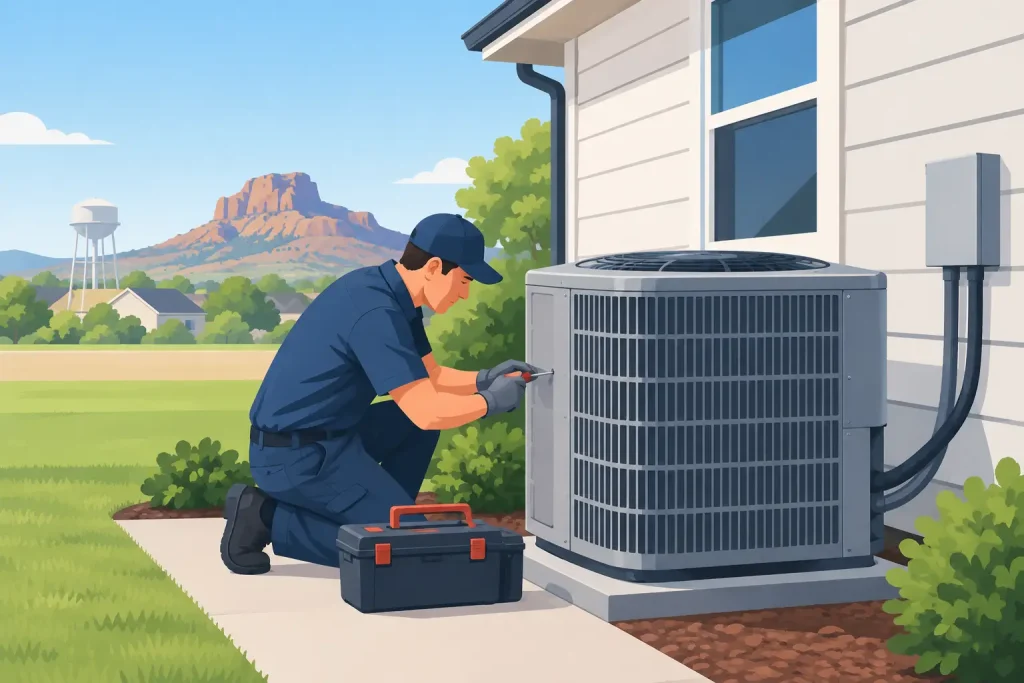
A July afternoon in Yukon can put an air conditioner to the test fast. If your system has not been checked since last cooling season, booking an AC tune up in Yukon, OK is a practical way to address small concerns before they become a no-cooling call on the hottest day of the year.
A tune-up is not a sales visit and it is not a promise that an older unit will never need repair. It is a thorough maintenance appointment designed to evaluate how your system is operating, clean key components, spot developing issues, and help your equipment run as efficiently and reliably as possible. For homeowners and small businesses, that means fewer surprises and clearer information about the condition of the system you depend on.
What an AC Tune Up in Yukon, OK Should Include
Air conditioning systems work hard through Oklahoma summers, and several components must operate together correctly. A quality tune-up looks beyond whether cool air is coming from the vents at that moment. The goal is to identify conditions that can lead to wasted energy, reduced comfort, water leaks, or premature wear.
During a typical maintenance visit, a technician should inspect the indoor and outdoor portions of the system. That includes checking electrical connections and components, evaluating the thermostat, inspecting refrigerant-related performance, examining the condensate drain, and looking over accessible duct connections and airflow concerns. The outdoor condenser coil and indoor equipment may also need cleaning, depending on their condition and manufacturer requirements.
A technician may also check the blower operation, temperature difference across the system, safety controls, and signs of wear on moving parts. If something needs attention, you should receive a straightforward explanation of what was found, why it matters, and whether it needs repair now or should simply be monitored.
That distinction matters. A dirty filter may be an easy homeowner fix. A weak capacitor, damaged wiring connection, clogged drain line, or low refrigerant charge deserves a closer look. Refrigerant does not get used up under normal operation, so low refrigerant can point to a leak that should be located and addressed rather than repeatedly topped off.
Why Maintenance Matters Before Summer Heat Arrives
Waiting until the first heat wave to turn on your AC can leave very little room for options. A system may appear fine during mild weather but struggle once it runs for hours at a time. Seasonal maintenance gives you a chance to correct issues before the equipment is under maximum demand.
Efficiency is another reason to schedule early. A clogged filter, dirty coil, restricted airflow, or electrical component beginning to fail can make the system work harder than it should. The result may be longer run times, rooms that never feel quite comfortable, and higher utility bills. A tune-up cannot make every older unit perform like a new high-efficiency system, but it can help the equipment operate closer to its intended condition.
Regular service also gives property owners a better basis for planning. If a technician finds that an aging system has multiple major concerns, you can consider repair and replacement options before an emergency forces a quick decision. In many cases, repair remains the sensible choice. Replacement should be recommended when the cost, reliability, efficiency, safety, or availability of parts makes keeping the existing equipment impractical.
Signs Your Air Conditioner Needs Attention Now
Annual maintenance is a smart habit, but certain symptoms should not wait for a routine appointment. Call for service if your system is blowing warm air, tripping breakers, cycling on and off repeatedly, making unusual grinding or buzzing sounds, or leaking water around the indoor unit.
Other warning signs can be less obvious. Uneven temperatures between rooms, weak airflow, a thermostat that does not seem accurate, rising power bills, and persistent humidity can all point to an HVAC issue. Some problems are minor. Others involve airflow, drainage, electrical components, or refrigerant performance that should be diagnosed by a qualified technician.
If the outdoor unit will not start, avoid repeatedly turning the thermostat down in hopes that it will recover. That will not fix the underlying issue and can place more strain on the system. Turn the thermostat off if you notice burning odors, smoke, or a breaker that continues to trip, then arrange service promptly.
What Homeowners Can Do Between Tune-Ups
Professional maintenance handles the detailed inspection and technical work, but a few simple habits can protect your comfort between visits. Check your filter regularly and replace it when it is dirty or according to the filter manufacturer’s guidance. A heavily loaded filter can restrict airflow and contribute to unnecessary system strain.
Keep the outdoor unit clear of grass clippings, leaves, stored items, and overgrown shrubs. The condenser needs room to move air, so do not cover it while the system is operating or block the space around it. Inside, make sure supply vents and return grilles are not covered by furniture, rugs, or boxes.
Pay attention to changes rather than waiting for a complete failure. If a room becomes consistently warmer, the system starts running longer, or you hear a new noise, schedule an evaluation. Catching a change early can sometimes limit the scope of a repair.
Homeowners should avoid opening electrical panels, adding refrigerant, or pressure-washing delicate coil fins. Those jobs require proper tools and training. A careful visual check and regular filter changes are helpful. Technical repairs are best left to a professional who can diagnose the root cause.
How Often Should You Schedule Service?
For most central air conditioners and heat pumps, once-a-year cooling maintenance is a good baseline. Spring is often ideal because it allows time to make repairs before summer demand is at its peak. If your equipment also provides heat through a heat pump, it should be checked before the heating season as well.
Homes with pets, heavy dust, frequent thermostat adjustments, older equipment, or high cooling demands may benefit from closer attention to filters and system performance. Small commercial properties may also need a maintenance schedule tailored to operating hours, occupancy, equipment type, and the impact of a breakdown on customers or staff.
A maintenance plan can be useful for customers who want a consistent service schedule and fewer details to keep track of. The value is not just the appointment reminder. It is having a reliable record of system condition over time and a trusted professional familiar with your equipment.
Choosing a Local HVAC Company for Your Tune-Up
A good tune-up should leave you more informed, not pressured. Look for a local HVAC company that explains findings in plain language, provides clear recommendations, and respects the difference between a necessary repair and an optional improvement.
Ask what is included in the visit and whether the technician will document any concerns. If repairs are recommended, request an explanation of the problem, the expected benefit of the repair, and what could happen if it is delayed. Honest answers help you make a decision that fits your budget and the realistic life expectancy of the equipment.
ComfortShield Heat & Air brings a veteran-owned approach to maintenance and repairs: inspect carefully, communicate clearly, and focus on fixing the issue that is actually causing the problem. Whether your system needs routine care, a targeted repair, or a conversation about replacement, you deserve service that puts your comfort and long-term costs first.
A well-timed tune-up is one of the simplest ways to head into summer with more confidence. Schedule before the heat settles in, keep up with filter changes, and address new symptoms early so your air conditioner has the best chance to carry your home or business through the season comfortably.