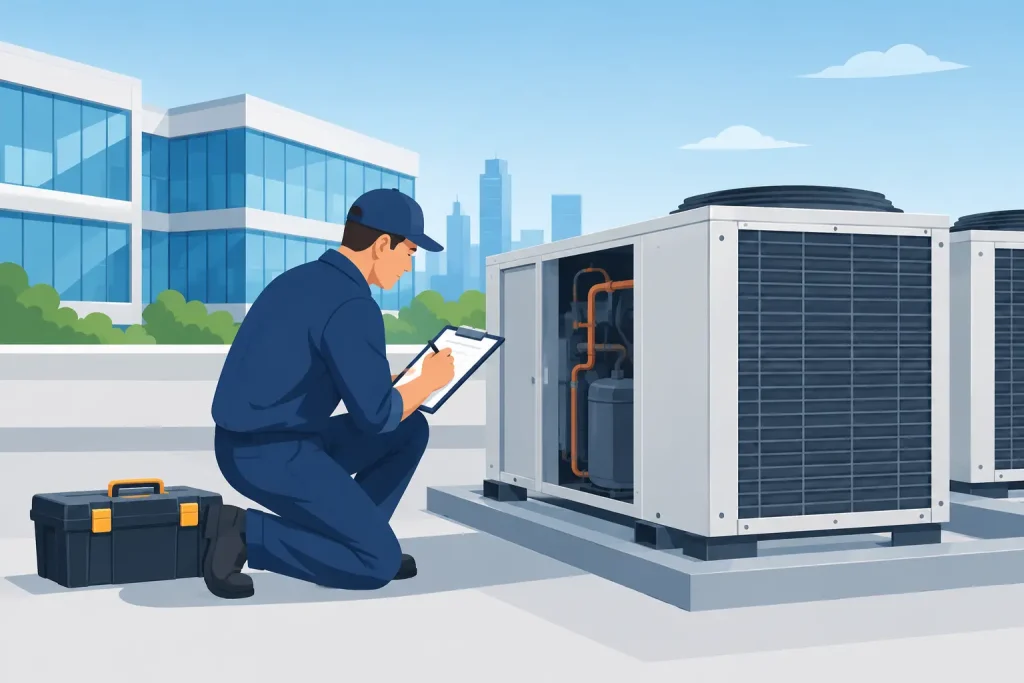
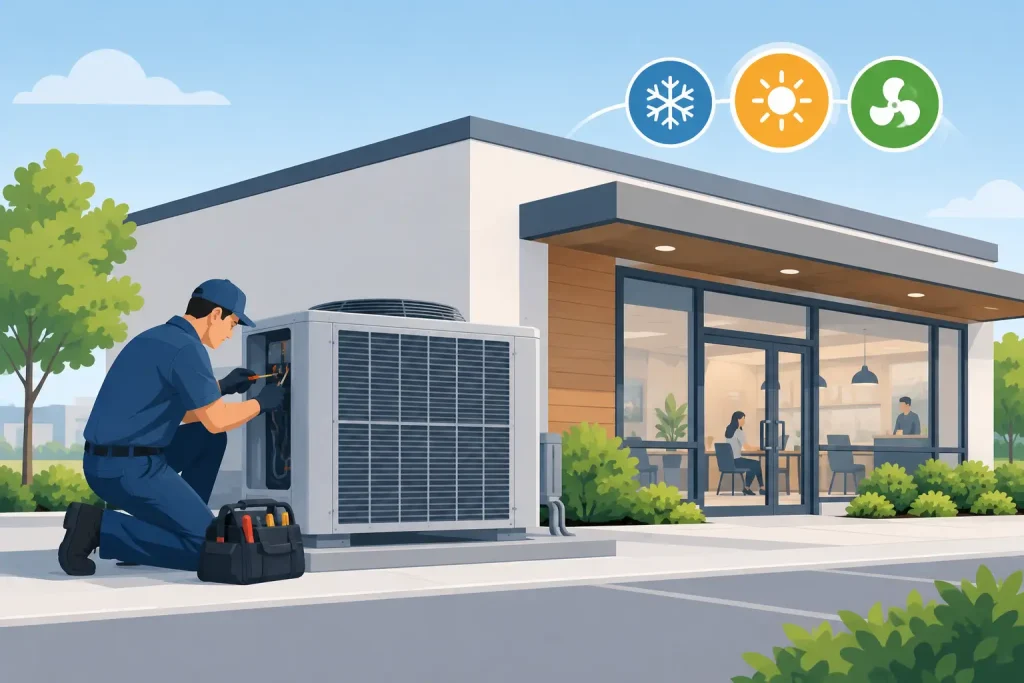
A busy office, retail space, or small facility cannot afford to lose heating or cooling at the wrong time. This commercial HVAC maintenance checklist helps property owners and managers catch small problems before they become comfort complaints, emergency repairs, or interrupted business hours. In Northwest Oklahoma City, that matters during both extended summer heat and sharp winter cold.
Preventive maintenance is not about replacing parts that still work. It is about checking the system carefully, correcting developing issues, and getting the most practical life from the equipment you already own.
Why Commercial HVAC Maintenance Needs a Plan
Commercial HVAC systems often run longer hours and serve more people than a typical home system. A clogged filter, blocked drain, loose electrical connection, or failing blower motor may start as a minor issue. Left alone, it can reduce airflow, drive up utility costs, strain other components, and eventually lead to a shutdown.
A written plan also makes maintenance easier to manage when responsibilities are shared. Staff can handle simple observations and housekeeping, while a qualified HVAC technician handles refrigerant, electrical, combustion, and internal mechanical work. The goal is clear: keep the building comfortable, protect your equipment investment, and avoid surprises when demand is highest.
Maintenance frequency depends on the building. A small office with standard business hours may need less attention than a restaurant, salon, retail shop with doors opening all day, or facility with heavy dust. Equipment age, occupancy, indoor air quality needs, and manufacturer requirements also affect the schedule.
Commercial HVAC Maintenance Checklist: Owner Tasks
These checks do not require taking equipment apart. Assign them to a property manager, maintenance lead, or another trained staff member, and document anything unusual for your HVAC technician.
Every Week or as Conditions Require
Walk through the occupied areas at roughly the same time each week. Listen for new rattling, buzzing, grinding, or high-pitched sounds. Ask employees whether certain rooms feel too warm, too cold, humid, stuffy, or drafty. A single hot office may point to a damper, thermostat, duct, airflow, or equipment issue that is easier to solve early.
Check that thermostats are powered on, set to the intended schedule, and not blocked by boxes, displays, heat-producing equipment, or direct sunlight. Make sure supply and return vents are open and unobstructed. Closing vents to force air into another room rarely fixes the underlying issue and can create airflow problems elsewhere.
Outside, keep the area around condensers and heat pump units clear. Remove loose trash, leaves, grass clippings, and stored materials. Do not stack inventory against the unit or cover it tightly. The system needs room to move air, and restricted airflow can raise operating pressure and wear on the compressor.
Every Month
Review or replace air filters on schedule. In many small commercial spaces, filters need attention monthly, but the right interval depends on filter type, operating hours, and building conditions. A visibly loaded filter should be changed even if the calendar says it has only been in place for a short time.
Use the correct filter size and rating for the equipment. A more restrictive filter is not automatically better. If it is not compatible with the system, it may limit airflow and create other problems. When in doubt, ask your HVAC provider what filter and replacement interval fit your equipment.
Also check for water around indoor equipment, ceiling stains near ductwork, drain pans, or air handlers, and musty odors when the system starts. Water should never be ignored. A blocked condensate drain can lead to property damage, mold concerns, shutdowns, and inconvenient repairs.
Seasonal HVAC Checklist for Small Businesses
Seasonal service should happen before the busiest heating and cooling months, not after a breakdown. Spring and fall are usually the best times to schedule professional tune-ups because technicians can inspect performance before the equipment is under maximum load.
Before Cooling Season
For air conditioners and heat pumps, a professional visit should include a full check of cooling operation, electrical components, capacitors, contactors, blower performance, refrigerant readings where appropriate, and thermostat control. The technician should inspect the condenser coil and indoor evaporator coil for dirt that restricts heat transfer.
Drain lines and condensate components deserve close attention before Oklahoma humidity arrives. A slow drain may not show itself until the system runs for long stretches. The technician should verify that water is draining correctly and address clogs or damaged drain components before they cause a ceiling leak or system shutoff.
Your team can prepare by confirming access to equipment, clearing the area around outdoor units, and reporting rooms that have had comfort issues in prior summers. That history helps the technician look beyond a quick temperature check and investigate the root cause.
Before Heating Season
For furnaces, safety comes first. A qualified technician should inspect burners, ignition components, the heat exchanger, gas connections, venting, combustion operation, safeties, and carbon monoxide risks. This is not a do-it-yourself inspection. If your building has gas-fired equipment, carbon monoxide detectors should also be present, functioning, and tested according to their instructions.
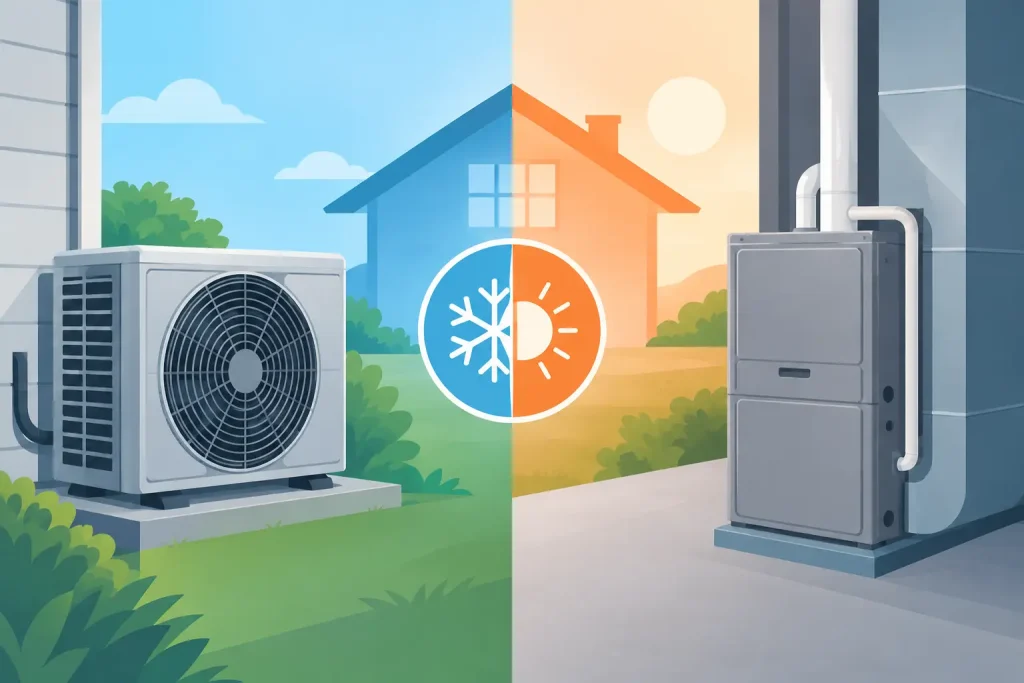
Heat pumps need a heating-mode performance check, including defrost operation when applicable. The system may run differently in cold weather than it does in cooling mode, so a spring inspection alone does not replace a fall heating check.
If staff notice gas odors, soot, repeated breaker trips, burning smells, or a carbon monoxide alarm, turn off the system if it is safe to do so, move people away from the affected area, and call for professional help. Do not keep resetting breakers or trying to operate equipment that appears unsafe.
What a Professional HVAC Maintenance Visit Should Cover
A thorough maintenance visit should be more than swapping a filter and leaving. The exact work varies by system, but the technician should inspect overall operation and explain what was found in plain language.
A quality visit commonly includes these core checks:
- Electrical connections, voltage, amperage, capacitors, contactors, and safety controls
- Blower assemblies, belts where installed, motors, bearings, and airflow performance
- Coils, filters, drains, drain pans, and signs of water leaks or restricted airflow
- Thermostats, equipment staging, temperature split, and normal startup and shutdown operation
- For heating equipment, fuel delivery, ignition, venting, combustion-related components, and heat exchanger condition
Not every recommendation requires immediate replacement. A worn capacitor, for example, may be a reasonable repair that helps avoid a no-cool call. A severely corroded coil, failing compressor, repeated refrigerant leak, or cracked heat exchanger calls for a more serious conversation about repair cost, reliability, safety, and remaining equipment life.
Ask for clear findings and options. The best decision is not always the lowest upfront price. It is the option that makes practical sense for your building, budget, operating schedule, and how long you plan to keep the property.
Keep Service Records That Help You Make Better Decisions
Keep a simple folder or digital log for each unit. Record the equipment model and serial number, installation date if known, filter sizes, service dates, repairs, recurring comfort complaints, and technician recommendations. Add notes about unusual utility bills or times when the system struggled to keep up.
These records help identify patterns. If the same unit needs refrigerant added repeatedly, trips a breaker, or produces hot and cold spots every season, the issue may be larger than routine upkeep. Good records also help a technician diagnose problems faster and help owners plan for replacement before a failed unit forces a rushed decision.
When to Call for Service Between Tune-Ups
Do not wait for the next scheduled visit if the system is short-cycling, blowing warm air in cooling mode, delivering weak airflow, leaking water, making loud new noises, or causing uneven temperatures that affect employees or customers. Call promptly if a thermostat is blank, a breaker repeatedly trips, or your utility costs rise without a clear reason.
For small commercial properties, fast attention can prevent a minor repair from becoming a closed office, uncomfortable sales floor, or damaged interior. ComfortShield Heat & Air can help local business owners sort out what needs immediate repair, what can be monitored, and what may be worth planning for.
A checklist works best when it becomes part of normal building operations, not a document pulled out after something fails. Put seasonal service on the calendar, give staff a simple way to report comfort concerns, and address changes while there is still time to make a calm, informed decision.