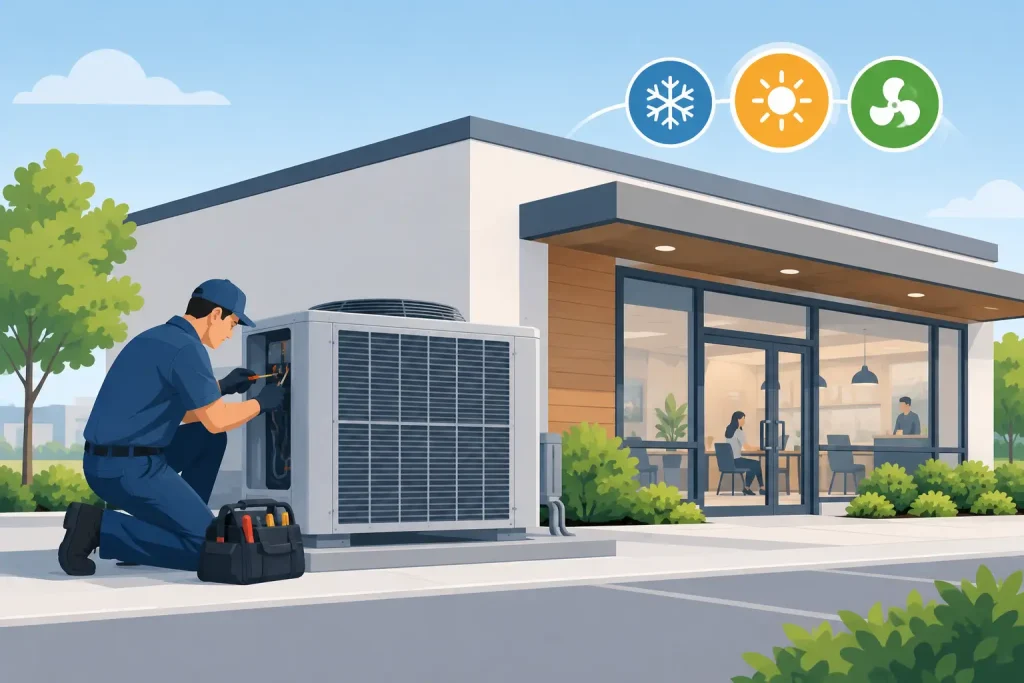
A hot sales floor, a stuffy office, or a cold waiting room can affect far more than comfort. Commercial HVAC problems can drive customers away, make employees less productive, put inventory at risk, and interrupt a normal workday when you can least afford it. For small businesses, dependable heating and cooling is not a luxury. It is part of keeping the doors open and the people inside comfortable.
The right plan is rarely just “replace it” or “keep repairing it.” A good commercial HVAC decision starts with an honest look at what the system is doing, why it is doing it, and what will serve the business best over time.
What Makes Commercial HVAC Different?
Commercial systems work harder than many people realize. Even a small office, retail shop, church, restaurant, or professional building may have longer operating hours, more people coming and going, more heat-producing equipment, and different comfort needs from one area to another.
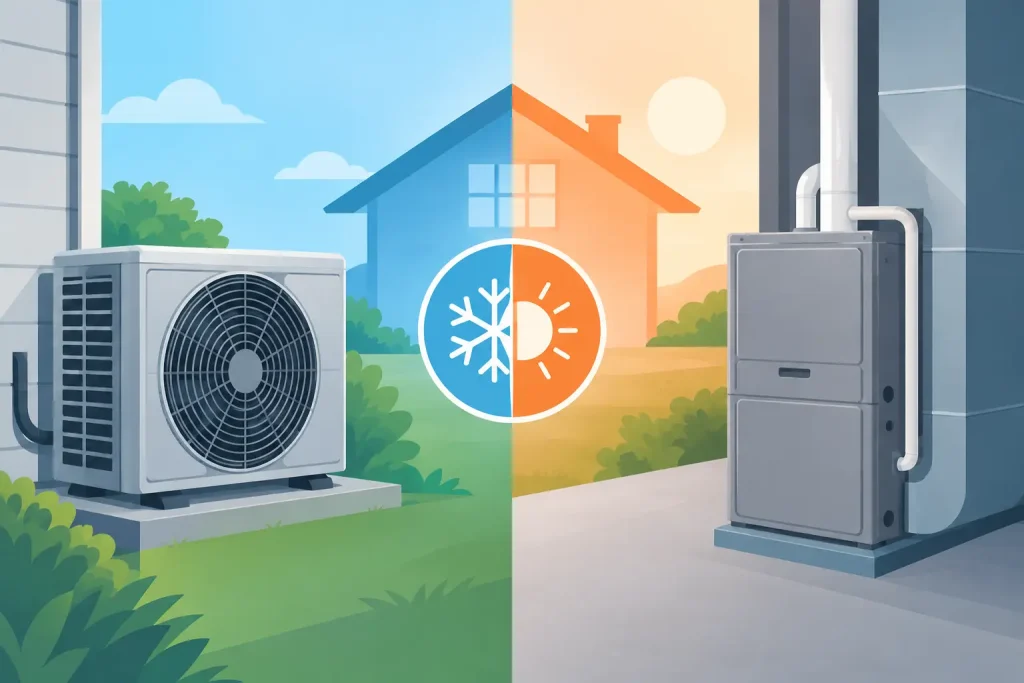
The equipment may also be arranged differently than a typical home system. Rooftop package units, split systems, heat pumps, ductless mini-splits, exhaust equipment, thermostats, zoning controls, and ventilation components all have to work together. When one part is not doing its job, the symptom may show up somewhere else.
For example, a business owner may notice that the front of the building stays warm every afternoon. The cause could be an aging air conditioner, but it could also be undersized ductwork, a thermostat in a poor location, a ventilation issue, dirty coils, air leakage, or heavy sun exposure through the storefront. Replacing equipment without investigating the full picture can leave the original problem partly unresolved.
Signs Your Business Needs Commercial HVAC Service
A total breakdown is an obvious reason to call for help, especially during an Oklahoma summer heat wave or a winter cold snap. But many systems give early warning signs before they stop running altogether.
If the building has hot and cold spots, weak airflow, unusual noises, rising utility bills, frequent thermostat adjustments, water around indoor equipment, or a system that runs almost nonstop, it is time to schedule an evaluation. Odors, excess humidity, and repeated breaker trips also deserve prompt attention.
Do not overlook employee and customer feedback. If people consistently complain that one room is uncomfortable, that matters. A recurring comfort complaint often points to an airflow, control, insulation, ductwork, or capacity issue that can be diagnosed and corrected.
For businesses with customer-facing spaces, timing matters. A repair planned before opening hours or during a slower period may reduce disruption. Waiting until a system fails can turn a manageable service call into an urgent situation with fewer scheduling options.
Repairs Should Address the Root Cause
A quality repair should do more than get cool or warm air moving again for the moment. It should identify why the part failed and whether another issue contributed to the failure.
Consider a system with a failed capacitor. Replacing that component may be the right repair, particularly when the rest of the unit is in good condition. But a technician should also check the motor, electrical connections, condenser coil condition, refrigerant performance, and overall strain on the system. If the unit is overheating because its coil is badly clogged or the airflow is restricted, the new part may fail sooner than it should.
The same principle applies to refrigerant leaks. Adding refrigerant can restore cooling temporarily, but refrigerant does not simply get used up. The leak needs to be located and evaluated. Depending on the age of the equipment, the type of refrigerant, the location of the leak, and the cost of the repair, fixing the leak may be the sensible path. In other cases, a replacement estimate may better protect the business from repeated expense.
Honest recommendations require context. A newer system with one isolated repair need is different from an older unit that has several major issues, poor efficiency, and increasing downtime. The goal should be practical reliability, not pressure.
Preventive Maintenance Protects Your Schedule
For a small business, maintenance is less about checking a box and more about reducing surprises. Seasonal service helps catch worn electrical components, drainage problems, airflow restrictions, loose connections, dirty coils, and declining heating or cooling performance before they become a no-cool or no-heat call.
A thorough commercial HVAC maintenance visit commonly includes checking operating pressures and temperatures, inspecting electrical connections, testing safety controls, cleaning key components as needed, evaluating filters, checking condensate drainage, and looking for signs of wear. The exact scope depends on the equipment and how the building is used.
Filters deserve special attention. A clogged filter can reduce airflow, increase energy use, strain motors and compressors, and leave rooms uncomfortable. In a busy business environment, filters may need attention more often than a standard residential schedule suggests. Construction dust, open doors, high foot traffic, pets, kitchen activity, or nearby road dust can all shorten filter life.
Maintenance also creates a useful service history. When the same technician or local team sees the equipment over time, they can spot patterns: a motor that is drawing higher amps, a unit that repeatedly loses a small amount of refrigerant, or a room that has never received enough airflow. That history supports better decisions when repair or replacement time comes.
When Replacement Is the Better Business Decision
No system lasts forever, and replacing equipment is a significant investment. Still, keeping an unreliable unit alive through repeated repairs can cost more in lost comfort, emergency calls, energy waste, and operational disruption than a planned replacement.
Replacement may make sense when the system needs a major repair, breaks down repeatedly, cannot maintain comfort during normal business hours, uses outdated refrigerant, or has become expensive to operate. Equipment age matters, but age alone should not make the decision. Some well-maintained units continue to serve a business well, while others develop serious problems earlier because of heavy use, poor installation, or deferred maintenance.
Before selecting new equipment, the building should be evaluated for more than the old unit’s size. A proper recommendation considers square footage, ceiling height, windows, insulation, occupancy, equipment heat load, ventilation needs, ductwork condition, and operating schedule. Installing the same size unit simply because it was there before is not always the right answer.
Bigger is not automatically better. Oversized equipment can cycle on and off too often, which may reduce humidity control and increase wear. Equipment that is too small may run constantly and struggle during peak conditions. The best fit balances capacity, efficiency, comfort, budget, and the specific demands of the space.
Planning Service Around Your Operations
Commercial HVAC work does not have to create unnecessary disruption. Clear communication before the visit helps the technician arrive prepared and helps the business plan around the work.
Let the service team know when the issue started, which rooms are affected, whether the system is running, any error messages displayed, and whether there have been recent electrical, roofing, remodeling, or thermostat changes. If you have photos of water leaks, ice buildup, or thermostat readings, those details can also help.
For larger repairs or replacement projects, ask what access is needed, how long the work is expected to take, whether the system will be off during business hours, and how the work area will be protected. A professional contractor should explain the process in plain language, including equipment delivery, installation steps, testing, cleanup, and old-unit removal when applicable.
At ComfortShield Heat & Air, the focus is on clear options and quality work that respects your time, your building, and your budget. Whether the answer is a targeted repair, a maintenance plan, or a replacement estimate, you should understand why that recommendation is being made.
A Reliable System Starts With a Timely Call
Comfort problems rarely improve by waiting, particularly when a system is already showing signs of strain. Scheduling service while the equipment is still operating can give your business more choices and may help prevent an after-hours breakdown. A careful inspection now can protect the comfort your employees and customers count on tomorrow.