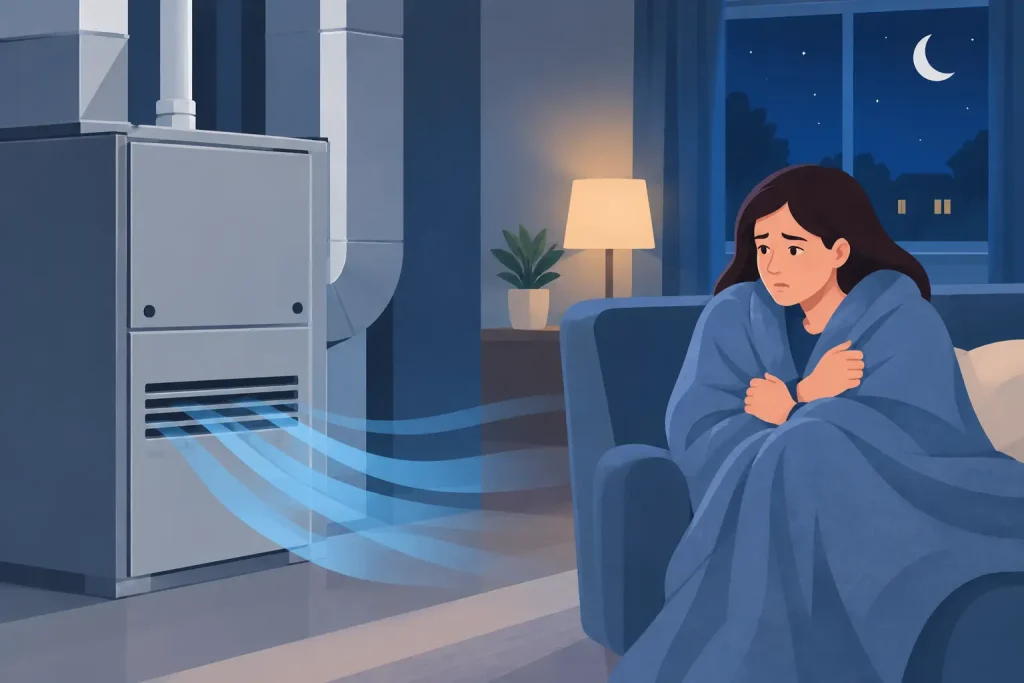
A furnace blowing cold air on a cold Oklahoma night is more than an inconvenience. It can leave your home uncomfortable quickly, raise concerns about safety, and make it hard to know whether a simple setting is the problem or whether your furnace needs repair. The good news is that several common causes are easy to check safely before you schedule service.
Start with the basics, but do not ignore warning signs. If you smell natural gas, notice smoke or burning odors that do not fade quickly, see water around the furnace, or a carbon monoxide alarm sounds, leave the area and contact the appropriate emergency service or utility provider. Do not try to restart the system until it has been checked.
Check These Settings Before Calling for Repair
Sometimes cold air is coming from the vents because the furnace is not actually being asked to heat. A thermostat setting, blower setting, or interrupted power supply can create symptoms that feel like a major breakdown.
First, make sure the thermostat is set to Heat, not Cool or Off. Set the temperature at least three to five degrees above the current room temperature, then wait several minutes. Furnaces have a normal startup sequence, and warm air may not reach every vent immediately.
Next, look at the thermostat fan setting. It should usually be set to Auto rather than On. With the fan set to On, the blower runs continuously, including between heating cycles. During those off periods, it pushes room-temperature or cool air through the ductwork. This is one of the most common and least serious reasons homeowners feel cold air from their vents.
Also check the furnace power switch and the electrical panel. Many furnaces have a nearby switch that resembles a light switch. If it was bumped off, turn it back on only if there are no unusual odors, sounds, or visible damage. A tripped breaker may be reset once. If it trips again, leave it off and schedule a professional diagnostic. Repeated breaker trips can point to an electrical or mechanical issue that needs proper testing.
Why Is Your Furnace Blowing Cold Air After It Starts?
If the furnace starts, the blower runs, and the air stays cold, the equipment may be shutting down before it can complete a heating cycle. Modern gas furnaces use several safety controls. When one of those controls detects an unsafe condition, the furnace may stop producing heat while the blower continues running to protect the equipment.
A dirty filter can cause overheating
A clogged air filter restricts airflow. That may not sound serious, but your furnace depends on adequate airflow to move heat safely through the system. When too little air passes over the heat exchanger, the furnace can overheat and trip a high-limit safety switch. The burners shut off, but the blower may keep running, sending cooler air through the house.
Check your filter if it has been more than one to three months since it was replaced, depending on the filter type, pets, household dust, and how often the system runs. If the filter looks gray, packed with debris, or bowed inward, replace it with the correct size and airflow rating. Avoid using an overly restrictive filter if your system was not designed for it. A technician can help you choose an option that balances air quality and proper system airflow.
The flame sensor may be dirty
A furnace must confirm that its burners are lit. The flame sensor is a small safety component that performs this job. When it becomes dirty or worn, the furnace may light briefly, then shut the burners off within a few seconds. The blower may continue, which makes it seem as though the furnace is working even though it is not producing heat.
This repair is often straightforward, but it is not a reason to bypass a safety device or repeatedly cycle the furnace. A trained technician should inspect the sensor, burner operation, wiring, venting, and overall combustion before recommending a repair.
Ignition, gas, or venting problems can stop the heat cycle
Older furnaces may use a pilot light, while most newer models use electronic ignition. If the igniter fails, the burners cannot light. A closed gas valve, gas supply issue, or a malfunctioning gas valve can create similar symptoms.
High-efficiency furnaces also produce condensation during normal operation. A blocked condensate drain, failed pressure switch, or obstructed intake or exhaust pipe can prevent safe startup. Outside vent pipes can collect debris, ice, or nests. Homeowners can visually check that exterior vents are clear, but should not disassemble venting or work inside the furnace cabinet unless qualified to do so.
Cold Air From Some Vents but Not Others
When only certain rooms feel cold, the furnace may be heating normally and the issue may be related to airflow distribution. Closed or blocked supply vents, obstructed return grilles, leaky ductwork, disconnected ducts, and an unbalanced system can all leave parts of the home uncomfortable.
Make sure furniture, rugs, or curtains are not blocking return-air grilles. Return airflow is just as important as supply airflow. Then confirm that supply vents are open. Closing too many vents in an attempt to force heat into another room can increase static pressure and create problems for the furnace.
In homes with a second story, bonus room, converted garage, or older ductwork, temperature differences may be more noticeable. Duct repairs, added insulation, zoning adjustments, or airflow balancing may be a better long-term answer than replacing a furnace that still has useful life. The right solution depends on what testing reveals.
Do Not Mistake a Heat Pump for a Furnace Problem
Some homes use a heat pump with an air handler or backup heat. In normal heating mode, a heat pump delivers air that is warm but may feel less hot than air from a gas furnace. That can be normal, especially during mild weather.
However, a heat pump that blows truly cold air, runs constantly without warming the home, or develops heavy ice buildup needs attention. It may be in a defrost cycle, have an airflow issue, or need service. The thermostat should not be switched repeatedly between settings, since that can make troubleshooting harder and may trigger expensive auxiliary heat use.
When to Turn the System Off and Call a Professional
Turn the furnace off and arrange service if it repeatedly starts and stops, blows cold air after basic thermostat and filter checks, makes loud banging or scraping sounds, leaks water, or produces a persistent burning smell. A yellow or flickering burner flame, rather than a steady blue flame on a gas furnace, also deserves prompt professional attention.
A qualified HVAC technician can test the full sequence of operation instead of replacing parts based on a guess. That means checking airflow, electrical components, safety switches, ignition, combustion, venting, drain systems, and duct performance as needed. Finding the root cause matters because a furnace can appear to have a failed part when restricted airflow or a neglected maintenance issue caused the failure.
For homeowners and small businesses in Northwest Oklahoma City and nearby communities, ComfortShield Heat & Air can diagnose the issue clearly, explain the practical options, and help you decide whether repair or replacement makes the most sense. If the equipment is aging, repairs are becoming frequent, or a major component has failed, replacement may be worth considering. If a targeted repair can safely restore reliable heat, that is often the better value.
Warm air should not be something you have to hope for when temperatures drop. A quick check of your thermostat, filter, and vents may solve the problem, but persistent cold air is your system asking for attention before a minor issue becomes a no-heat emergency.