A failed air conditioner during an Oklahoma heat wave or a furnace problem on a cold night rarely arrives when the budget is ready. HVAC financing can give homeowners and business owners a way to address an urgent repair or replacement without postponing the work that keeps a property safe and comfortable.
Financing is not automatically the best answer for every job. A minor repair may be more sensible to pay for directly, while an aging system with repeated breakdowns may justify a planned replacement. The right choice depends on the condition of the equipment, the total project cost, the payment terms, and what protects your comfort and budget over time.
When HVAC Financing Makes Sense
Financing is often most useful when waiting creates a bigger problem. If an air conditioner has failed in the middle of summer, delaying replacement can mean days of unsafe indoor heat, missed work, and added stress for families, pets, tenants, or customers. For a small business, a loss of heating or cooling can also disrupt employees and drive customers away.
It can also make sense when a repair only buys a little time. For example, if an older system needs an expensive compressor repair, has a history of failures, and uses an outdated refrigerant, putting a large amount into the repair may not be the best long-term value. A technician should explain the repair option honestly, along with the expected condition of the system afterward. Replacement should be recommended because it serves your needs, not because a new unit is easier to sell.
For planned replacements, financing may allow you to choose equipment that better matches the home or building. Proper sizing, efficient performance, dependable components, and needed ductwork corrections can all matter more than simply selecting the lowest initial price. Still, a higher-efficiency system is not automatically the right investment. Savings depend on your current equipment, utility usage, home condition, maintenance habits, and how long you expect to own the property.
Start With the Right Diagnosis
Before discussing payment plans, make sure the scope of work is clear. A system that will not cool may have a simple electrical issue, a thermostat problem, a clogged drain, low airflow, a refrigerant leak, or a major component failure. Those are very different repairs with very different costs.
A thorough diagnosis protects you from financing work that does not solve the root cause. Ask what failed, why it likely failed, what the repair includes, and whether there are related concerns that should be addressed now. If replacement is being considered, ask whether the existing ductwork, ventilation, electrical connections, and drainage setup can support the new equipment properly.
For a replacement estimate, you should receive a clear explanation of the recommended system and the work involved. That may include removal of old equipment, installation, startup testing, thermostat options, permits when required, and disposal. Knowing what is included makes it much easier to compare financing offers fairly.
What to Compare in HVAC Financing Offers
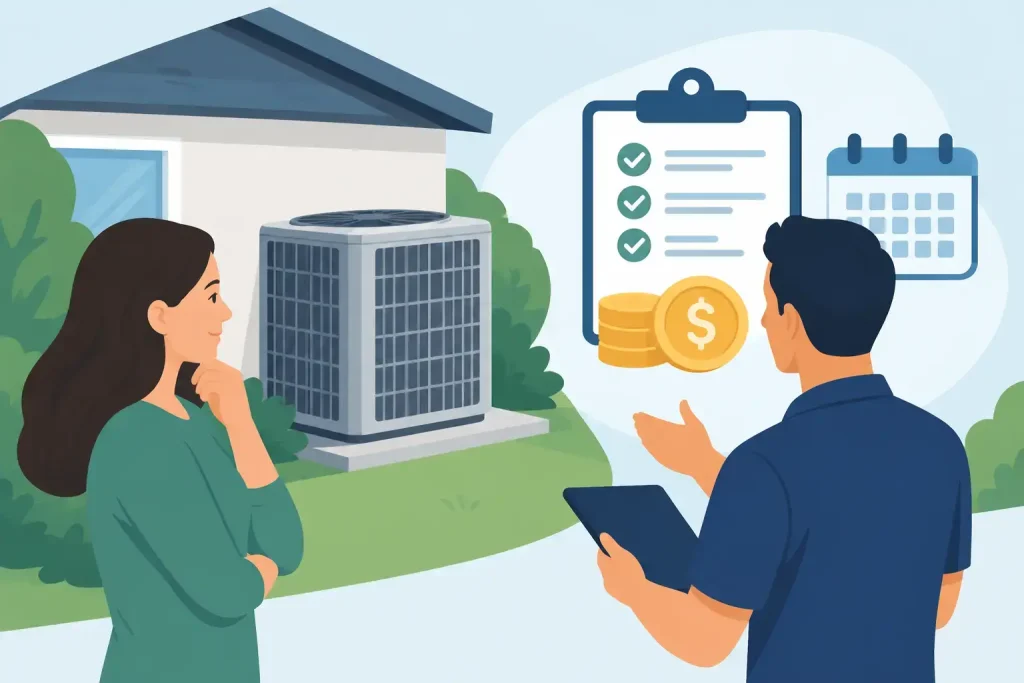
The monthly payment gets attention first, but it is only one part of the decision. A lower payment can result from a longer repayment period, which may increase the total amount paid. Review the full financing disclosure before you agree to anything.
Pay close attention to the annual percentage rate, commonly called APR. This figure helps show the cost of borrowing over a year, including certain fees when applicable. Some programs offer promotional periods with low or no interest, but the details matter. A deferred-interest offer may charge interest back to the original purchase date if the balance is not paid in full by the promotional deadline. That can turn an affordable plan into a costly one.
Ask about the loan term, required monthly payment, late-payment policies, prepayment penalties, origination fees, and whether the payment can change. Also confirm whether financing is subject to credit approval and whether the contractor receives payment directly from the lender after the work is completed. Terms vary by financing provider and applicant, so do not rely on an advertised payment alone.
Before signing, be prepared to answer these practical questions:
- What is the total project price, including all installation work and applicable taxes?
- What will I pay each month, and for how many months?
- What is the APR, and is any promotional interest deferred or truly waived?
- What is the total amount I will pay if I make only the required payments?
- Can I pay the balance early without a penalty?
A good financing conversation should feel straightforward. You deserve time to read the terms and ask questions, especially when the system failure has created urgency.
Repair Financing vs. Replacement Financing
A repair can be the right move when the system is relatively young, the failure is isolated, and the rest of the equipment is operating well. Financing a repair may help restore comfort quickly without draining cash reserves. It is particularly reasonable when the repair extends the useful life of the system for several more years.
Replacement deserves a closer look when the equipment is near the end of its expected service life, repair costs are climbing, comfort is uneven, or energy bills have become difficult to manage. Repeated service calls are not just inconvenient. They can be a signal that the system is no longer dependable enough for your household or business.
The best comparison is not repair cost versus replacement cost alone. Consider what the repair is expected to accomplish, the likelihood of another major expense, the efficiency difference, warranty coverage, and your plans for the property. Sometimes a repair is a responsible short-term decision. Sometimes it only delays a larger expense while leaving you without reliable cooling or heat.
Keep the Project Within a Comfortable Budget
Financing can make a major HVAC project manageable, but the payment should still fit comfortably alongside your regular expenses. Avoid choosing a term or equipment package solely because the first monthly number looks low. Consider seasonal utility costs, property expenses, and the possibility of unexpected household or business needs.
If you have cash available, a mixed approach may help. Making a down payment can reduce the financed balance and monthly payment, while leaving enough savings for emergencies. If a promotional payoff period fits your budget, set reminders and consider automatic payments so the balance is paid before the deadline. If it does not fit, a standard fixed-rate option may be easier to plan around.
For property owners with more than one system, it may also be worth discussing whether to replace only the failed unit or develop a phased plan. There is no one-size-fits-all answer. A phased approach can protect cash flow, while replacing matched equipment together may make more sense in some homes and commercial spaces.
Work With a Contractor Who Explains the Whole Picture
Financing should support a sound HVAC decision, not pressure you into one. Look for a contractor who explains repair and replacement options in everyday language, provides a written estimate, and is willing to discuss the condition of your current equipment without scare tactics.
At ComfortShield Heat & Air, the goal is to identify the root cause, recommend practical options, and help customers understand the work before moving forward. For homeowners and small businesses in Northwest Oklahoma City and nearby communities, that means clear estimates, dependable installation practices, and financing options when a major expense cannot wait.
When your comfort system needs attention, take the time to understand both the equipment decision and the payment decision. The best plan is one that restores reliable heating or cooling now while leaving you confident about the months ahead.