A burning smell from your vents can make a house feel unsafe fast. Sometimes it is simply dust burning off after months without heat. Other times, it is a warning that a motor, wire, or electrical component is overheating. Knowing why HVAC smells burning helps you make the right call without ignoring a problem that could get worse.
The first rule is simple: if the odor is sharp, smoky, or getting stronger, turn the system off at the thermostat. If you see smoke, hear buzzing, notice sparking, or smell melting plastic, shut off power to the unit at the breaker if you can do so safely and call for emergency HVAC service. Do not keep running the system to see whether the smell clears.
Why HVAC Smells Burning When Heat First Starts
In Oklahoma, heating equipment may sit unused through much of the year. When temperatures finally drop and the furnace or heat pump starts for the first time, dust on the heat exchanger, electric heat strips, and nearby components can burn away. This usually creates a light dusty or slightly burning smell that lasts only a few minutes to an hour.
A normal dust-burning odor should fade as the system runs. Opening a window briefly can help clear the smell, and replacing a heavily loaded air filter may reduce dust circulating through the equipment. If the odor returns every time the system starts, lasts beyond the first heating cycle, or becomes stronger, it deserves a professional inspection.
Heat pumps can produce a similar odor when they switch into defrost mode during cold, damp weather. The outdoor unit temporarily changes operation to remove frost from the coil. A brief odor can occur, but a strong burning smell inside the home is not something to dismiss.
Electrical Problems Can Create a Hot, Acrid Smell
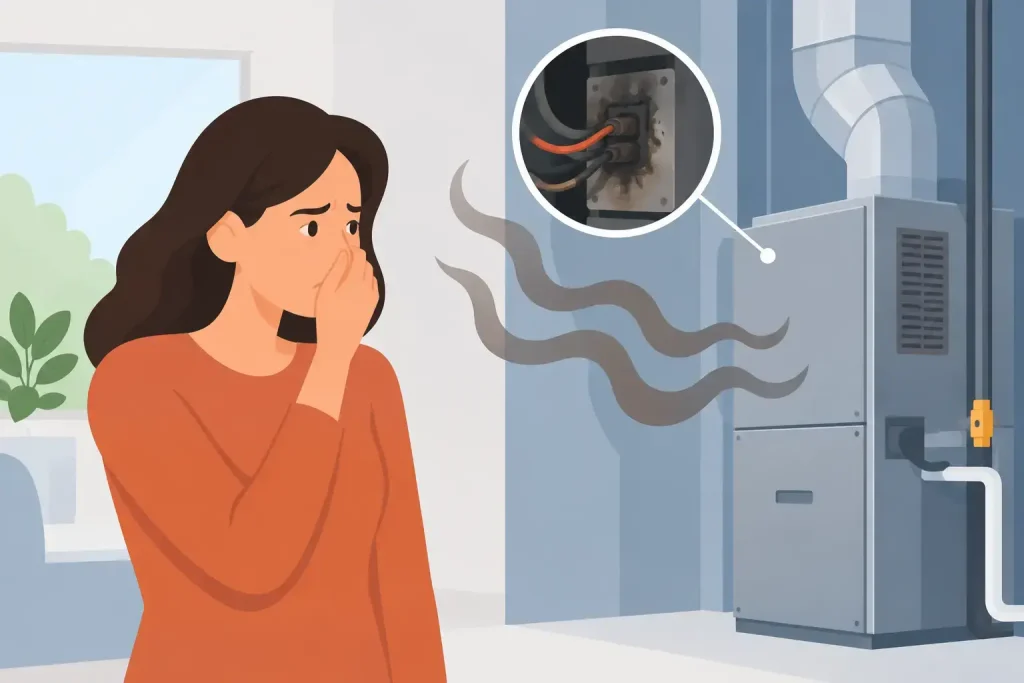
An electrical burning smell is often described as sharp, metallic, fishy, or similar to hot plastic. This can happen when wiring insulation overheats, a connection becomes loose, a capacitor fails, or a circuit board develops a problem. Blower motors and inducer motors can also overheat when they are worn, obstructed, or struggling to start.
These issues do not usually resolve on their own. Continuing to run the equipment can damage more parts and may create a fire risk. Turn the HVAC system off and arrange a diagnostic visit. A trained technician can identify whether the source is inside the air handler, furnace, outdoor unit, electrical disconnect, or another part of the system.
A breaker that trips repeatedly is another reason to stop using the equipment. Resetting it once after an isolated event may be reasonable, but repeated trips are the system telling you something is wrong. Do not keep resetting the breaker and hoping for a different result.
A Clogged Filter Can Overwork the System
A dirty filter is one of the most common and preventable contributors to overheating. When airflow is restricted, the blower has to work harder and the furnace or air handler cannot move heat properly. In a gas furnace, poor airflow can cause the unit to overheat and trigger a safety limit switch. In an air conditioner or heat pump, it can place extra strain on the blower motor and other components.
Check the filter if it is safe to do so and replace it if it is visibly dirty or overdue. Use the filter size and type recommended for your system. A very restrictive filter is not always better, especially if the equipment was not designed for it. If replacing the filter does not solve the smell, leave the system off and have it checked.
Burning Rubber May Point to a Motor or Belt
Some older HVAC systems use belt-driven blower assemblies. A worn, loose, or misaligned belt can create a burning-rubber smell as it slips against the pulley. Newer systems generally use direct-drive motors, but they can still produce an odor if bearings are failing or the motor is overheating.
You may also notice reduced airflow, squealing, grinding, or a blower that starts and stops unexpectedly. Those symptoms call for a repair rather than a quick fix. Replacing a belt may be straightforward, but a failing motor, damaged wheel, or electrical issue needs a full diagnosis to prevent repeat problems.
A Burning Smell From a Gas Furnace Needs Careful Attention
Gas furnaces have several safety controls, but they still need regular maintenance and proper venting. Dust burning off can be normal at the start of the season. The smell of natural gas, exhaust fumes, or something that seems like burning plastic is different and should be treated seriously.
If you smell gas, leave the building, avoid switches and open flames, and contact your gas utility or emergency services from a safe location. Do not attempt to relight the furnace or troubleshoot gas connections yourself.
A cracked heat exchanger does not always create a burning smell, but it is one reason professional inspection matters when a furnace is acting unusually. Symptoms can include soot, flame changes, frequent cycling, rattling, or headaches and nausea among occupants. Working carbon monoxide detectors on every level of the home and near sleeping areas are essential for any home with fuel-burning equipment.
Could the Smell Be Coming From Outside?
Not every odor that reaches the vents starts inside the HVAC system. An outdoor condenser or heat pump located near a grill, vehicle exhaust, landscaping equipment, or a neighbor’s fire pit can draw in outside odors. A return-air leak in an attic, crawl space, garage, or wall cavity can also pull in smells from areas that should not be part of the home’s air supply.
If the smell appears only when the blower runs, the ductwork and return side of the system may need attention. This is especially relevant in older homes and small commercial spaces where renovations, storage areas, or damaged duct connections can affect indoor air quality.
What You Can Check Before Calling
There are a few safe observations that can help speed up a service visit. Check whether the smell happens in heating mode, cooling mode, or fan-only mode. Notice whether it comes from every vent or only one area. Look at the filter, and make sure supply registers are open and not blocked by furniture or boxes.
Do not remove furnace panels, touch wiring, spray fragrances into vents, or try to mask the odor with candles. Candles and air fresheners can make it harder to identify the source, and open flame is never a good idea around a possible electrical or gas-related concern.
For a business, it is also wise to note whether the odor affects a specific suite, zone, or time of day. That information helps narrow down whether the issue is tied to a particular air handler, thermostat schedule, or piece of equipment.
When Repair Makes Sense and When Replacement May Be Better
A burning smell does not automatically mean you need a new HVAC system. Many causes, including a dirty filter, failing capacitor, worn blower motor, loose electrical connection, or damaged belt, can be repaired effectively. The right answer depends on the equipment’s age, condition, repair history, efficiency, and the cost of restoring safe operation.
Replacement becomes more reasonable when an older system has major electrical damage, a failed heat exchanger, repeated motor failures, or repair costs that are high compared with the value and expected life of the equipment. A trustworthy recommendation should explain the root cause, present the repair option when practical, and give you clear numbers to make an informed decision.
ComfortShield Heat & Air approaches burning odors with that same focus: identify the cause, verify the repair, and help you protect both comfort and equipment life. If the smell is persistent, sharp, or accompanied by smoke, do not wait for a more convenient time. Turning the system off and getting a qualified technician involved is the safest next step for your home or business.