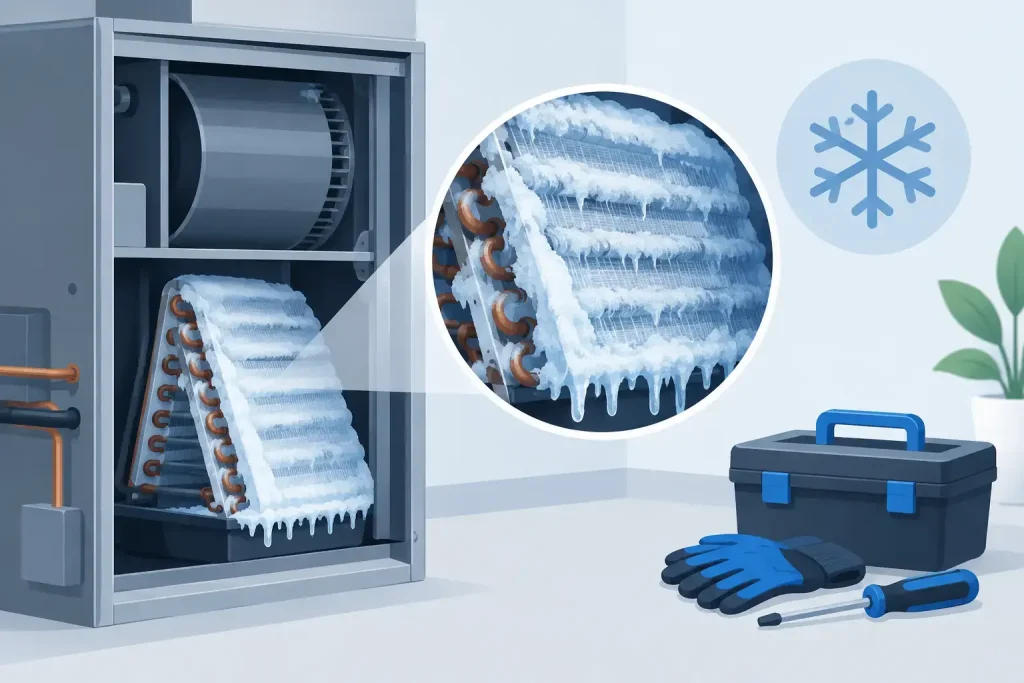
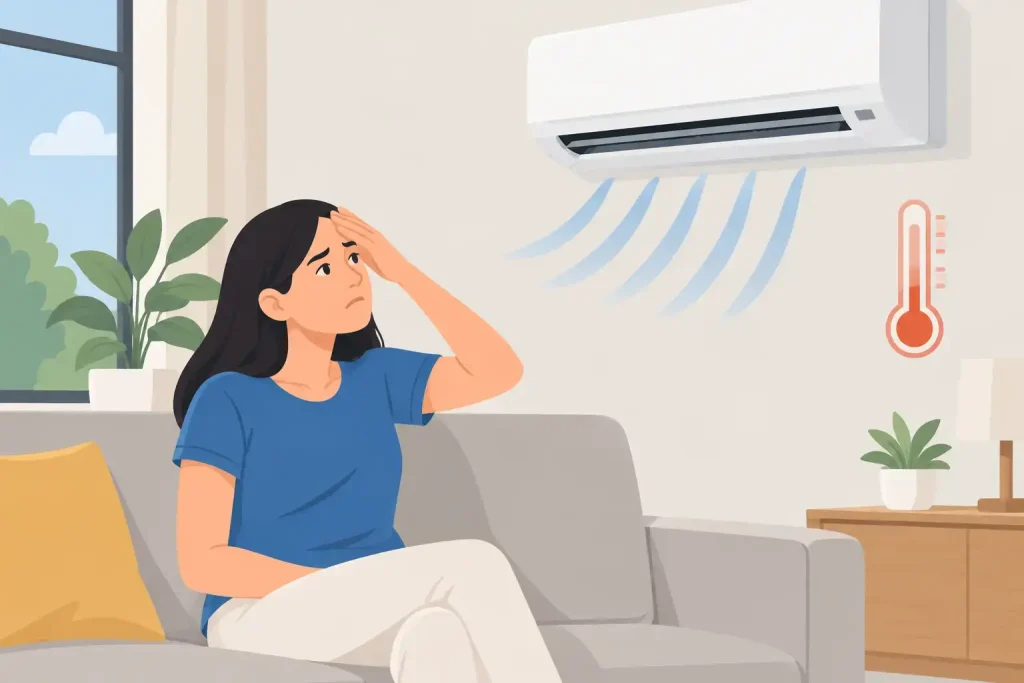
Your thermostat is set to cool, but the air coming from the vents is weak, warm, or has stopped altogether. Then you notice ice on the refrigerant line near the indoor unit. A frozen evaporator coil is a common AC problem, especially during an Oklahoma summer when your system is working hard. Turning the system down lower will not solve it. In most cases, it makes the ice worse.
The evaporator coil is the indoor part of your air conditioner that absorbs heat from your home’s air. It needs steady airflow and the correct refrigerant charge to do that job. When either condition is off, the coil can drop below freezing and collect ice. The visible ice is the symptom. Finding the reason it froze is what protects your comfort and helps prevent damage to the equipment.
What to Do When Your Evaporator Coil Freezes
First, turn the cooling system off at the thermostat. Do not keep running the AC in hopes that it will push through the problem. Continued operation can strain the compressor, which is one of the most expensive components in an air conditioning system.
If your thermostat has a separate fan setting, you can set the system fan to ON to help move warmer household air across the coil and speed thawing. Keep in mind that a badly frozen coil may take several hours to thaw completely. Water may drain from the unit as the ice melts, so check for overflow around the indoor equipment.
Do not chip at the ice, use a sharp object, or pour hot water on the coil. Coil fins and refrigerant tubing are easy to damage, and a small puncture can turn a repairable issue into a larger one. Once the system has thawed, check the air filter and make sure supply and return vents are open and unobstructed. If the filter is dirty, replace it with the correct size and type.
If the system freezes again after these basic steps, schedule a professional diagnostic visit. Repeated freezing is a clear sign that the underlying problem has not been corrected.
Why a Frozen Evaporator Coil Happens
A coil freezes when its surface temperature falls below 32 degrees while moisture in the air continues to collect on it. That can happen for more than one reason, and the correct repair depends on the cause.
Restricted airflow
Poor airflow is one of the most frequent causes. Your AC depends on warm indoor air moving across the evaporator coil. That airflow brings heat to the coil, allowing refrigerant to absorb it properly. When airflow drops, the coil can become too cold and freeze.
A clogged filter is the simplest example, but it is not the only one. Closed vents, blocked return grilles, a dirty evaporator coil, damaged ductwork, or a failing blower motor can all reduce airflow. In some homes, an overly restrictive filter can contribute to the problem as well. Filters with very high ratings can be useful in the right system, but not every blower is designed to pull air through them effectively.
This is why replacing a filter may solve the issue in one home but not another. A technician should verify actual airflow rather than assume the filter was the whole problem.
Low refrigerant from a leak
Low refrigerant can also cause a frozen coil. Refrigerant does not get used up like fuel. If the system is low, there is usually a leak that needs to be located and repaired.
With an insufficient refrigerant charge, pressure in the evaporator coil can drop too low. That changes the coil temperature and can lead to ice buildup. The AC may run for long periods, cool unevenly, or blow air that feels less cool than usual before it freezes.
Simply adding refrigerant without addressing a leak is not a lasting repair. It may restore cooling temporarily, but the refrigerant will escape again and the system can freeze once more. A proper repair identifies the leak, evaluates the condition of the system, and confirms the charge after the repair is complete.
A dirty indoor coil
Even with a clean filter, the evaporator coil can gradually collect dust and debris. The coil is tucked inside the indoor unit, so most homeowners cannot see its condition without opening equipment panels. Dirt creates an insulating layer that limits heat transfer and restricts airflow through the coil.
Cleaning the coil properly takes care. Technicians use appropriate cleaning methods and inspect the drain pan, condensate line, blower compartment, and surrounding components at the same time. This is often where routine maintenance helps catch a developing issue before it turns into a no-cooling call.
Blower or control problems
Your indoor blower must move the right amount of air across the coil. A weak blower motor, worn capacitor, failing control board, loose wiring, or incorrect blower speed can reduce airflow enough to cause freezing. These issues may be intermittent, which is why a system can appear to work normally for part of the day and freeze later.
A technician can test motor performance, electrical components, static pressure, and temperature differences across the system. Those measurements help separate an airflow problem from a refrigerant problem, rather than replacing parts based on a guess.
Outdoor conditions and system operation
Running central AC when outdoor temperatures are unusually cool can sometimes freeze the coil, particularly overnight or during mild weather. This is more likely if the system already has marginal airflow or refrigerant issues. Thermostat settings, oversized equipment, and incorrect installation details can also affect how the system performs.
For heat pumps, frost on the outdoor unit during heating season is a separate situation. A light frost can be normal, and the system should periodically enter a defrost cycle. Heavy ice that does not clear, however, needs professional attention.
Signs You Should Call for AC Repair
A clean filter and a fully thawed coil may get your system moving again, but do not ignore recurring symptoms. Call for service if you see ice return, hear the system running without cooling the home, notice water around the indoor unit, or find that airflow remains weak after replacing the filter.
You should also call if the refrigerant line outside the indoor unit is iced over. The ice you can see often extends farther into the equipment than it appears. Continuing to run the system risks liquid refrigerant returning to the compressor, which can cause serious damage.
For small businesses, a frozen coil can quickly affect customers, employees, inventory, and daily operations. Early service is usually less disruptive than waiting for a complete shutdown during a busy summer day.
What a Professional Diagnosis Should Include
A thorough AC diagnostic should look beyond the ice. The goal is to confirm why the coil froze and recommend only the repair the system actually needs.
At ComfortShield Heat & Air, that process begins with checking the filter, vents, blower operation, drain system, electrical components, and overall airflow. Refrigerant pressures and temperatures are measured to determine whether a refrigerant issue may be present. If a leak is suspected, the equipment’s age, condition, repair history, and expected service life all matter when discussing options.
Repair is often the right choice when the system is otherwise in good condition and the issue can be corrected reliably. Replacement may make more sense if an older unit has a major coil leak, repeated compressor-related problems, or repair costs that no longer serve the homeowner’s long-term needs. You deserve a clear explanation either way, without pressure.
Preventing Coil Freeze-Ups
The most practical prevention is regular maintenance. Check your filter monthly during heavy-use seasons and replace it when it is visibly dirty or according to the manufacturer’s guidance. Keep return grilles and supply vents open, and avoid blocking them with furniture, rugs, or storage.
Seasonal maintenance gives a technician the opportunity to inspect the coil, verify drainage, test blower performance, and catch refrigerant or electrical concerns early. In Northwest Oklahoma City, where long stretches of summer heat can keep an AC running hard, those checks can make a meaningful difference in comfort and equipment life.
A frozen coil is your air conditioner’s way of telling you something is out of balance. Shut the cooling off, allow the system to thaw, handle the simple filter check, and get help if the problem returns. Addressing the root cause now can help keep a manageable repair from becoming a midsummer breakdown.